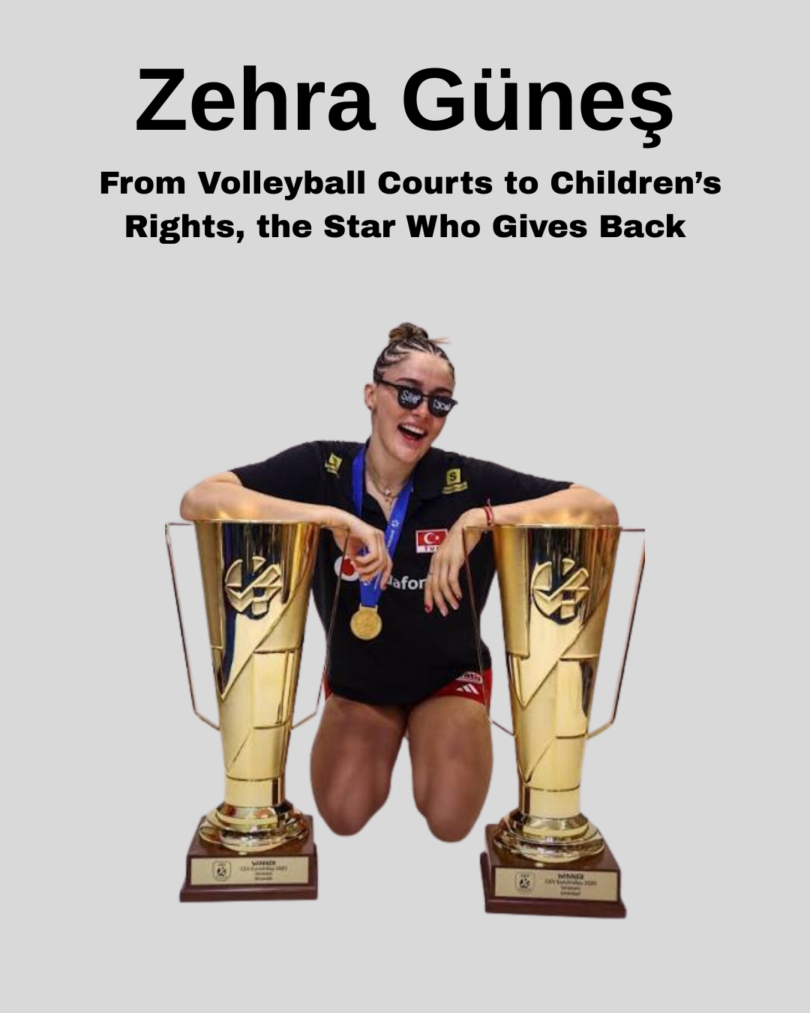

Some athletes are remembered for what they do with a ball. A smaller group is remembered for what they do after the final whistle. Zehra Güneş belongs to both.
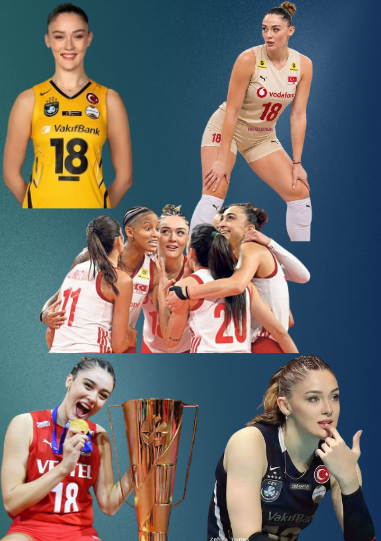
On the court, she is the tall middle blocker at the net for VakıfBank Istanbul and the Turkish national team, the player who turns an opponent’s best spike into a point for her side. Off the court, she is a UNICEF Child Rights Advocate, giving her time and her name to girls and children across Türkiye.
Those two sides of her life fit together better than you might expect. In this blog, we will walk through both, from a childhood in Istanbul to the second European title she helped win in September 2026. Everything here comes from official announcements and reliable sports records, so you can read with confidence.
A Tall Girl from Kartal Who Fell for Volleyball
Zehra Güneş was born on 7 July 1999 in Kartal, a district on the Asian side of Istanbul. She took up volleyball at the age of 12 and joined the youth system of VakıfBank, one of the most successful clubs in women’s volleyball.
Her height clearly helped. She is listed at roughly 1.97 to 1.98 metres, depending on the source, which is ideal for a middle blocker. But plenty of tall players never reach the top level. What made Zehra different was how early people noticed her.
Volleyball is a family affair too. Her sisters, İrem Nur and Mina, play the sport as well.
A quick profile:
- Born: 7 July 1999, Kartal, Istanbul
- Position: middle blocker
- Club: VakıfBank Istanbul, where she is team captain
- National team: Türkiye, nicknamed the Sultans of the Net
- Off-court role: UNICEF Türkiye Child Rights Advocate
Young, Fast and Already Winning
Zehra’s name was appearing in youth tournament reports long before she became a household name. At the 2015 FIVB Girls’ U18 World Championship in Peru, she was named Best Middle Blocker. At the 2017 U20 World Championship in Mexico, she was again named among the best middle blockers. That same year, she played for the Turkey U23 team that won the World Championship in Slovenia.
Her club path had one small detour. In the 2016-17 season, she was loaned to Beşiktaş to gain experience, then returned to VakıfBank. It paid off. In 2017-18 she became a key player on the first team and won her first Turkish league title. VakıfBank also won the CEV Champions League that season, the biggest club competition in European women’s volleyball.
The senior national team came next. She was admitted to the squad in March 2018 and played in the very first Volleyball Nations League, where Türkiye finished with silver. She was only 18 at the time.
Why Everyone Calls Her the Wall at the Net
Ask Turkish volleyball fans about Zehra and one word keeps coming up: wall. The nickname comes from her blocking, which has stopped a lot of attackers over the years.
2023 was the year that reputation really took off. Türkiye won its first ever Nations League title, and Zehra was named the tournament’s Best Middle Blocker. She scored 14 points in a 3-1 semifinal win over the United States, then added 9 more in a 3-1 win over China in the final.
Later that year, she helped Türkiye win its first European Championship, beating Serbia 3-2 in the final in Brussels. She was named among the best middle blockers there too. With VakıfBank, she was also named Best Middle Blocker at the 2023 Club World Championship.
Blocking is rarely the flashiest part of the game. Fans remember thunderous spikes and diving saves. Yet a good middle blocker changes how the other team plays, because attackers start thinking twice about where to hit. That quiet pressure is what Zehra brings to the net.
The Trophy Shelf, Explained
Numbers tell part of the story, so here is a look at her national team results:
- 2017: U23 World Championship, gold
- 2018: Nations League, silver
- 2019: European Championship, silver
- 2021: Nations League and European Championship, bronze in both
- 2021: Tokyo Olympics, fifth place
- 2023: Nations League and European Championship, gold in both
- 2024: Paris Olympics, fourth place
- 2025: World Championship, silver
- 2026: Nations League and European Championship, gold in both
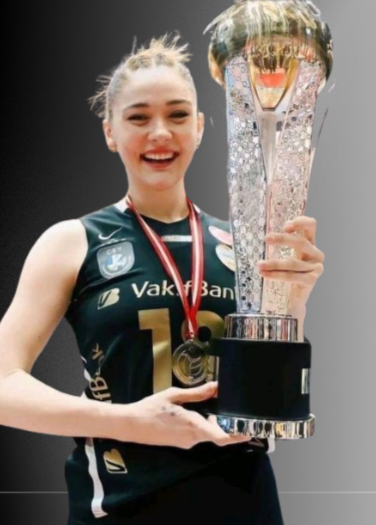
With VakıfBank, she has collected several Turkish league titles, Turkish Cups, Champions League titles and Club World Championship medals. Since the 2024-25 season, she has also worn the captain’s armband.
Look closely at that list and you will notice something. It is not all gold. There are silvers, bronzes and a couple of near misses at the Olympics. Zehra’s career has not been a straight line to the top. It has been a steady climb with disappointments along the way, and she kept coming back. That is exactly the kind of story young athletes need to hear.
The Day a Volleyball Star Became a Child Rights Advocate
On 18 November 2024, just before World Children’s Day, UNICEF Türkiye announced Zehra as its newest Child Rights Advocate. The announcement introduced her as a member of the Turkish national team and captain of VakıfBank.
Her role has a clear focus. She supports UNICEF Türkiye’s work to empower adolescent girls, promote their safety and well-being, and push for equal opportunities so that every girl can chase her dreams.
In her statement, she said she knows what it means to be supported, and that it was now her turn to support other girls. She also told girls that when they work hard, “even the sky is not the limit.”
UNICEF’s Representative in Türkiye, Paolo Marchi, made a point that deserves attention. He said Zehra is a champion in volleyball, but millions of girls could become champions in other sports and professions if given the chance. That one thought explains the whole idea behind an advocate’s role.
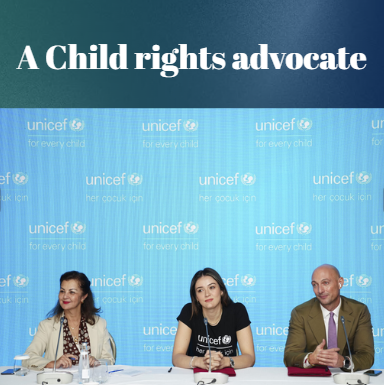
With the appointment, she joined UNICEF’s global network of Advocates, which includes leaders from many different fields. UNICEF itself has a mandate from the United Nations General Assembly to advocate for children’s rights, help meet their basic needs and expand their opportunities.
What Zehra Wants for Girls
When you read what Zehra has said about her UNICEF role, three ideas keep coming back.
- Skills, confidence and leadership. She believes that when girls are supported to lead and grow, they can shape their own futures and contribute to their families and to society.
- Mental health and psychological support. She has pointed out that psychological support makes girls more resilient and helps them follow their dreams with confidence.
- Equal opportunities. She stresses that girls and boys should have the same chances to succeed.
None of these ideas is complicated, and that is their strength. They are practical, and they connect to her own life. A girl who is encouraged to play a sport learns teamwork, discipline and self-belief, and those things help far beyond the court.
It is also good to see mental health on that list. Strong bodies and strong minds go together, and young people do better when both are looked after.
A Day in Hatay That Went Beyond Photos
Words are easy. Showing up is harder. In February 2025, Zehra visited Hatay, one of the areas affected by the powerful earthquakes of 6 February 2023.
Those earthquakes struck 11 provinces in southeast Türkiye and neighbouring Syria. Two months later, UNICEF warned that 2.5 million children in Türkiye still needed humanitarian support. In Hatay, UNICEF has supported child-friendly spaces where displaced children can play, draw and receive psychological first aid.
The Turkish Red Crescent’s Community Centers, a UNICEF partner, shared that Zehra visited their child-friendly space in Hatay and spent cheerful time with the children. UNICEF also published a video in which she talks about her day.
What stands out is her reflection. She said the day passed in the blink of an eye, but she knows that despite everyone’s efforts, these children still face many challenges. There is no fake positivity in that. She enjoyed the day and she stayed realistic.
That honesty is what makes advocacy believable. Recovery after a disaster is slow, and it helps when the people who visit do not pretend otherwise.
Listening to the Future
Her advocacy also had a campaign moment. Around World Children’s Day in November 2024, UNICEF Türkiye ran activities under the theme “Listen to the Future.” Zehra joined UNICEF National Ambassadors Tûba Büyüküstün and Hadise in sharing videos on social media, reading heartfelt letters from children across Türkiye about their hopes and dreams.
It is a simple idea with real value. Instead of adults talking about what children need, children’s own words reached a wide audience through familiar voices. Zehra lent her platform to the kids rather than to herself.
Why It Matters When a Champion Speaks Up
It is fair to ask whether celebrity advocacy really changes anything. A single visit will not solve the challenges children face after a disaster, and Zehra herself said as much. But visibility is where many solutions begin. When a well-known athlete visits a child-friendly space, people talk about it. Reports get shared. A subject that might have slipped down the news feed gets attention again.
There is also the role model effect. Picture a girl in Türkiye who plays volleyball in a school gym. Seeing a woman from Kartal who started at 12, reached the Olympics and now speaks up for children makes that path look real. UNICEF’s representative made a similar point when he welcomed her into the role.
Credibility matters too. Advocacy works best when it comes from someone who has earned respect in her own field. Zehra’s record of titles, her captaincy and her consistency give her words weight. People listen to her because she has proved herself where it counts.
Fresh From a Home Crowd Triumph
Her story has a very recent chapter. On 6 September 2026, Türkiye beat Italy 3-2 in a dramatic five-set final at the Sinan Erdem Sports Hall in Istanbul and won the European Championship for the second time in a row. Earlier that summer, the team had also won the Nations League.
Zehra played a big part. She scored 12 points in the final, including a match-high six blocks, and she was named one of the tournament’s best middle blockers alongside Hena Kurtagić. According to Daily Sabah, the win also secured Türkiye a place at the 2028 Los Angeles Olympics.
Every trophy she lifts gives her a bigger stage. When she talks about girls and children, more people are listening. Her success on the court and her advocacy off it feed each other.
Lessons Worth Borrowing From Zehra
You do not need to be a professional athlete to take something from her path. A few ideas stand out:
- Start early and stay patient. She began at 12, spent a season on loan to gain experience and built her career one step at a time.
- Handle setbacks well. Silver medals and fourth place finishes did not stop her. They are part of her record, right next to the golds.
- Use your platform for something bigger. Fame is more useful when it helps other people.
- Show up in person. A visit to Hatay says more than a hundred posts.
- Be honest. She admits that challenges remain, and that makes her more trustworthy.
Quick Answers About Zehra Güneş
Who is Zehra Güneş?
She is a Turkish professional volleyball player, born on 7 July 1999 in Kartal, Istanbul. She plays middle blocker for VakıfBank and the Turkish national team.
What is her role with UNICEF?
She is a Child Rights Advocate for UNICEF Türkiye. She was appointed on 18 November 2024, with a focus on empowering and protecting adolescent girls.
What has she won with the national team?
She has won the European Championship in 2023 and 2026, the Nations League in 2023 and 2026, and a silver medal at the 2025 World Championship.
Is she a team captain?
Yes. She has been the captain of VakıfBank since the 2024-25 season.
Where has she visited as an advocate?
In February 2025, she visited a child-friendly space in Hatay and spent time with children there.
The Final Point
Zehra Güneş’s story is bigger than blocks and trophies. It starts with a 12-year-old from Kartal picking up a volleyball and grows into a career with European titles, Olympic appearances and a captain’s armband. Then it does something many sports stories never do. It turns outward.
By using her position to speak up for girls, to support children’s well-being and to visit a community still healing from a disaster, she shows that success on the court can carry meaning off it. She is not only winning matches. She is helping open doors for the next generation of girls who dream big.
And maybe that is her best block yet: standing between a young girl and the idea that her dreams are too big.