


Some stories in sports feel too dramatic to be real. A child born in a remote Russian town, a family fleeing the shadow of a nuclear disaster, a seven year old girl landing in America with less money than most people spend on a weekend trip, and yet somehow, within a decade, she is holding the Wimbledon trophy. That is not a movie script. That is the actual life of Maria Sharapova.
Her journey is one of the most compelling in modern tennis, not just because of the trophies, though there were plenty, but because of everything that happened before anyone knew her name.
Born Under the Shadow of Chernobyl
Maria Yuryevna Sharapova was born on April 19, 1987, in Nyagan, a small town in Siberia. Her parents, Yuri and Yelena, were originally from Gomel, a city in Belarus. Just months before Maria was born, the Chernobyl nuclear disaster struck, and the radioactive fallout put their hometown at serious risk. Worried about the health effects, especially with a baby on the way, the couple packed up and left, eventually settling far from the danger zone.
It is a strange thing to think about now. The woman who would become one of the most famous athletes on the planet began her life as the result of a family literally running from a catastrophe.
By the time Maria was three, the family had relocated again, this time to Sochi, a city on Russia’s Black Sea coast. It was there, quite by accident, that her path toward tennis began.
A Racket, a Wall, and a Four Year Old
When Maria was four years old, her father struck up a friendship with a man named Aleksandr Kafelnikov, whose son Yevgeny would later become a two time Grand Slam champion and Russia’s first ever world number one男 player. Aleksandr handed young Maria her first tennis racket almost as a passing gesture.
Nobody could have known what that small moment would lead to.
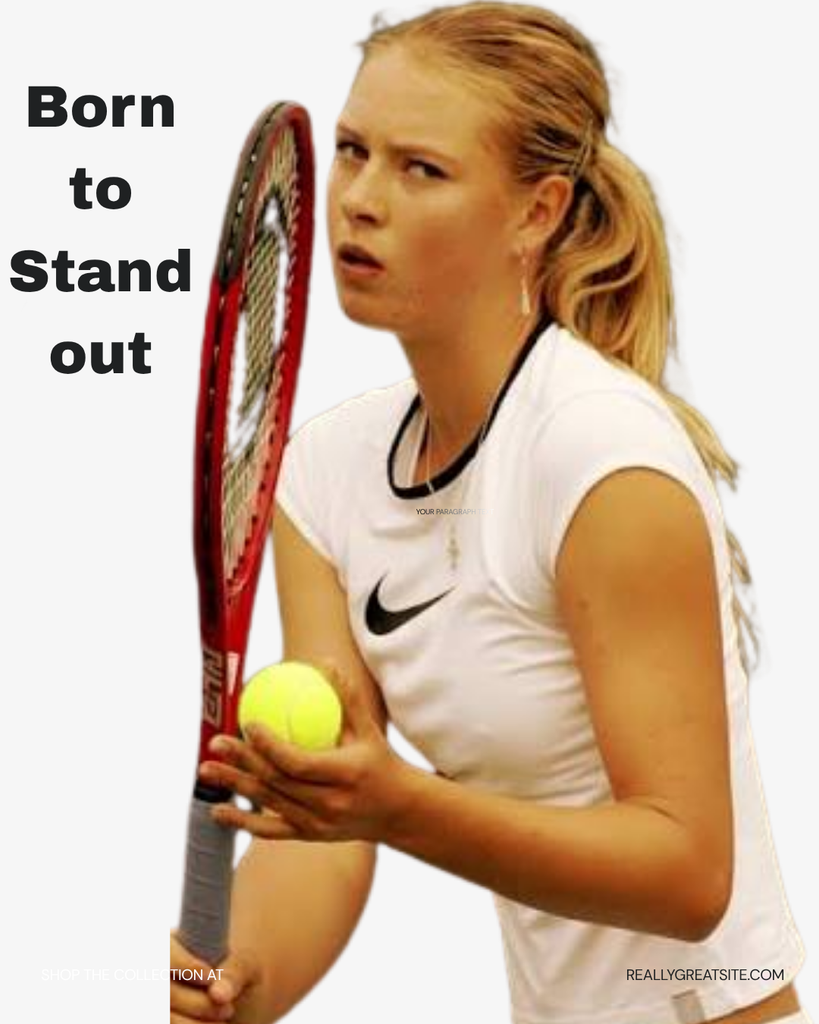
Maria started hitting balls against a wall with her father in the local park. There was no formal coaching plan, no grand vision, just a little girl and a racket that was probably too big for her hands. A veteran Russian coach named Yuri Yutkin later gave her some of her first real lessons and immediately noticed something different about her hand eye coordination.
Then came the moment that changed everything.
The Navratilova Moment
In 1993, when Maria was just six, she attended a tennis clinic in Moscow run by none other than Martina Navratilova, one of the greatest players in the history of the sport. Navratilova watched the young girl play and recommended something bold. She suggested that Maria’s family consider sending her to train under Nick Bollettieri in Florida, at what was then considered the best tennis academy in the world.
For a family with no real financial cushion, this was an enormous ask. Bollettieri’s academy had already produced legends like Andre Agassi and Monica Seles. It was a place built for talent, but talent alone did not pay the bills.
Arriving in America With Almost Nothing
In 1994, Yuri Sharapov made the decision that would define his daughter’s future. He took seven year old Maria and left for the United States. Yelena could not join them right away because of visa complications, meaning mother and daughter would not see each other for nearly two years.
The amount of money they carried with them has been reported slightly differently across sources, somewhere between 700 and 1,000 dollars, scraped together from savings, help from grandparents, and money Yuri earned working in the Siberian mines. Either way, it was barely enough to survive on, let alone fund a tennis career.
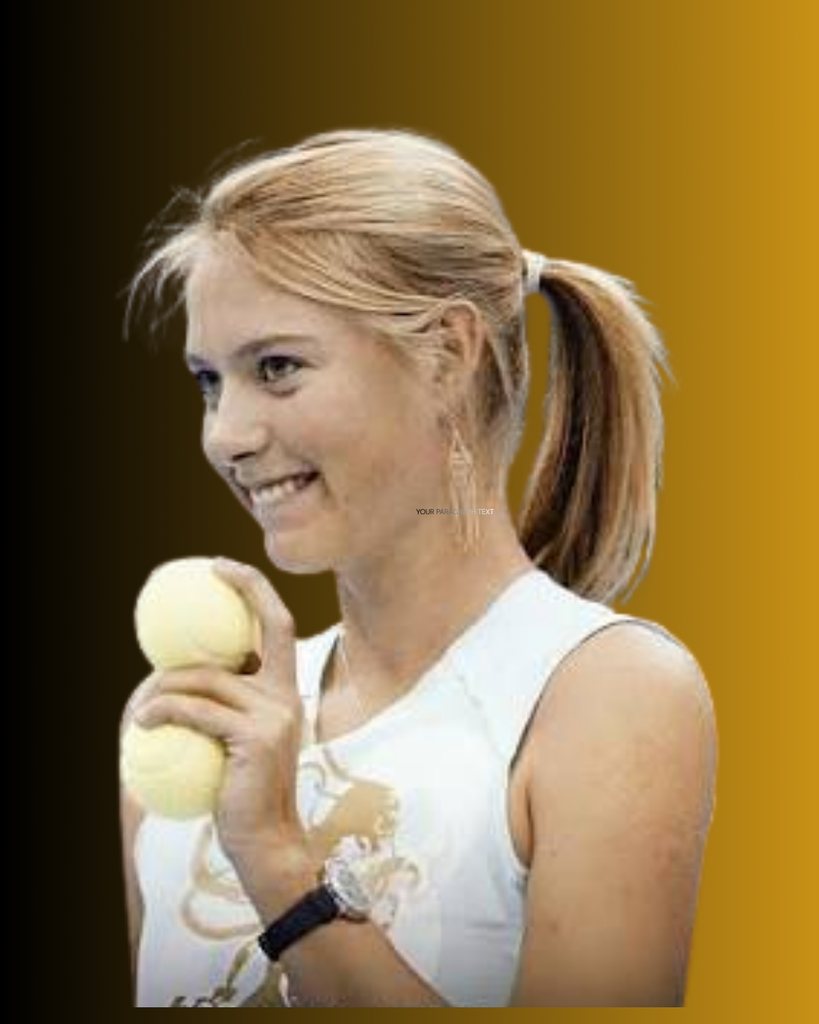
They landed in Miami late at night. The people who were supposed to meet them never showed up. Yuri did not speak English and had no idea how to reach anyone. A stranger sitting nearby on the plane ended up helping them find their way. It was the first of many times strangers would step in to help this small, determined family.
Once they made it to Bradenton, Florida, home of the Bollettieri academy, reality set in quickly. Maria showed up with a single change of clothes, an oversized cut down racket, and a pair of shoes made in a factory in Minsk. Most of the other kids training there came from wealthy families. She stood out immediately, and not in a way that felt comfortable.
A Father’s Sacrifice
While Maria trained during the day, Yuri worked whatever jobs he could find. He washed dishes. He mowed lawns and maintained golf courses. Anything that brought in a bit of cash to cover rent and tennis fees went toward keeping his daughter’s dream alive.
The two of them lived in a small apartment owned by a middle aged Russian woman, sleeping on a pull out couch. They paid a modest monthly fee just for kitchen and bathroom access, along with use of the living room and its television. It was through watching that television, oddly enough, that Maria began learning English.
There is something deeply human about this part of the story. Before the world number one rankings, before the endorsement deals, there was just a father and daughter trying to survive in a country where they knew almost no one.
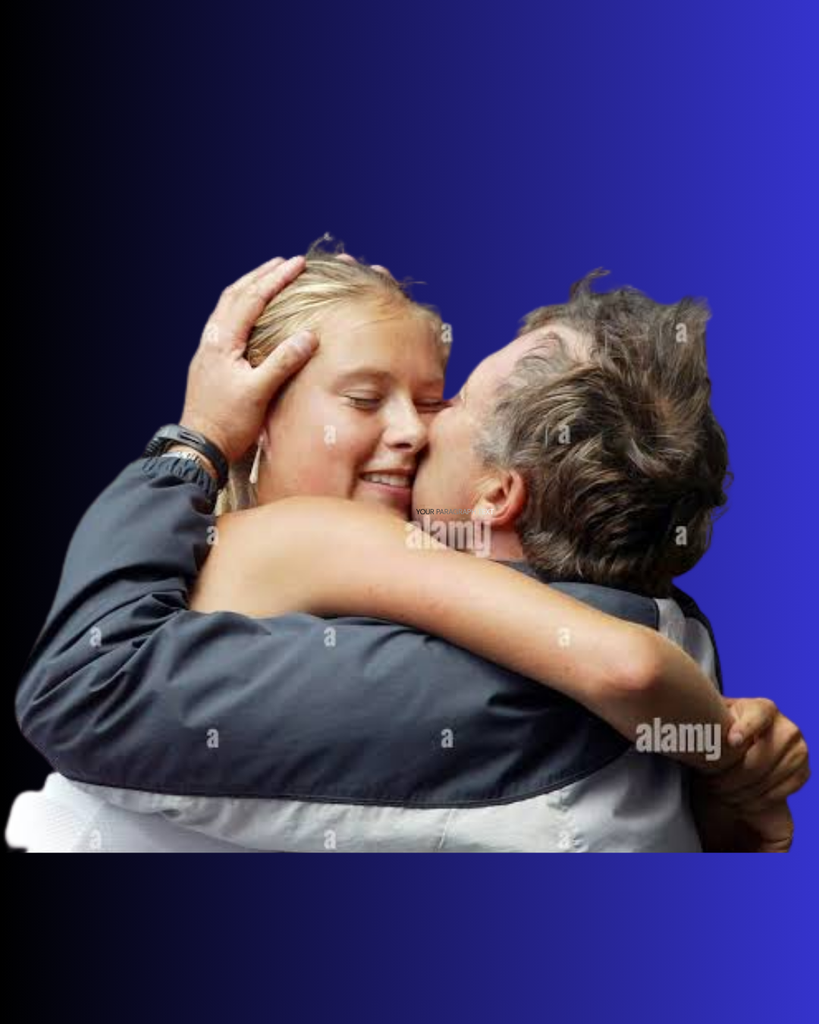
When Maria turned nine, her talent caught the attention of IMG, the massive sports management agency that owned Bollettieri’s academy. IMG agreed to cover the steep 35,000 dollar tuition, and for the first time, the financial pressure eased slightly.
Turning Professional at Fourteen
Maria Sharapova made her professional debut in 2001, on her fourteenth birthday. Even as a teenager, she was already showing flashes of the player she would become, long limbed, powerful, and fearless on court.
By 2003, she had cracked the top 50 in the world and won her first WTA title at the AIG Japan Open. She also reached the fourth round at Wimbledon that year in her very first attempt at the tournament. It was a preview of something bigger.
The Wimbledon Miracle of 2004
If there is one moment that turned Maria Sharapova from a promising young player into a global star, it happened at Wimbledon in 2004.
At just seventeen years old, she faced Serena Williams, the defending champion and one of the most dominant players tennis had ever seen, in the final. Almost nobody gave Sharapova a real chance. She was young, relatively unknown outside tennis circles, and up against a legend playing on her home turf of grass courts.
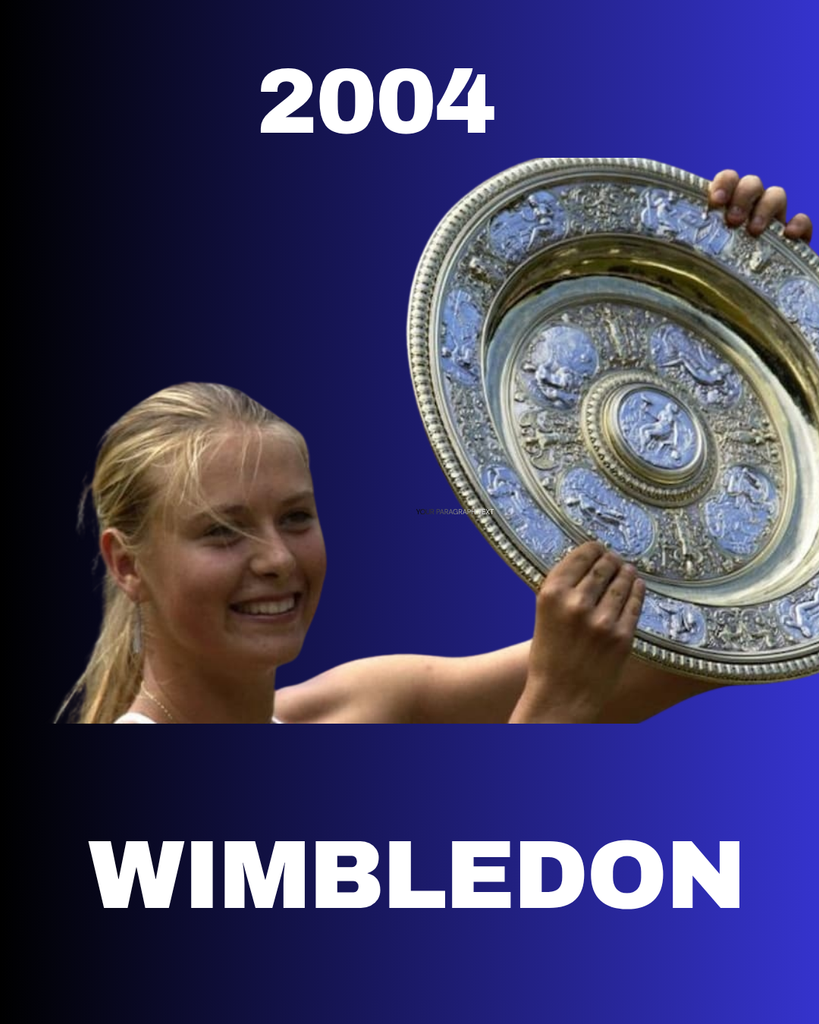
Sharapova won in straight sets.
It was a stunning upset that made her the third youngest woman ever to win Wimbledon and the first Russian woman to claim the title. Overnight, she became one of the most talked about athletes in the world, known for her powerful groundstrokes, her fierce grunts on court, and a maturity that seemed to belong to someone twice her age.
Climbing to the Top of the World
The success did not stop there. In 2005, Sharapova became the first Russian woman ever to reach the world number one ranking, a remarkable achievement for someone who had arrived in America less than a decade earlier with next to nothing.
In 2006, she added a second Grand Slam title at the US Open. Two years later, in 2008, she won the Australian Open, her third major title, completing an incredible run that placed her among the sport’s elite.
But tennis, like life, rarely moves in a straight line upward.
Shoulder Trouble and the Long Road Back
Starting in 2007, Sharapova began battling persistent shoulder problems that would plague her for years. The injury forced her out of major tournaments, including missing the 2008 US Open and the Beijing Olympics, right after her Australian Open triumph. She eventually needed shoulder surgery, a procedure that sidelined her for the better part of a year and raised real questions about whether she would ever return to her previous level.
Plenty of athletes never recover fully from injuries like that. Sharapova did.
Completing the Career Grand Slam
In 2012, after years of rebuilding her game and her body, Sharapova won the French Open, a tournament played on clay, historically her least comfortable surface. She once famously compared her movement on the red clay of Roland Garros to a cow on ice, a joke that captured just how much she had to work to master conditions that did not come naturally to her.
That French Open win made her only the tenth woman in tennis history to complete a career Grand Slam, meaning she had won all four major tournaments at least once. It was a defining achievement, proof that her success was not limited to grass or hard courts.
Later that year, she also captured a silver medal in singles at the 2012 London Olympics, adding another accomplishment to an already impressive resume.
In 2014, she won the French Open again, this time coming back from yet another shoulder injury to do it. That victory turned out to be her fifth and final Grand Slam title.
By the numbers, her career included five major singles titles, thirty six WTA titles overall, five separate stints at world number one, and 408 weeks spent ranked in the top five. These are not small numbers. They place her among the most successful women to ever pick up a racket.
The Scandal That Shook Her Career
Then came 2016, and a moment that changed everything.
In January of that year, Sharapova tested positive for meldonium, a substance that had only recently been added to the World Anti Doping Agency’s list of banned drugs, effective January 1, 2016. She had reportedly been taking the medication for years for legitimate health reasons, but its addition to the banned list meant her continued use put her in violation of anti doping rules.
She addressed the failed test publicly herself in March 2016, taking responsibility rather than hiding from it. The International Tennis Federation initially suspended her for two years. On appeal to the Court of Arbitration for Sport, that suspension was reduced to fifteen months.
It was a painful chapter, one that cost her both time and reputation. Some sponsors distanced themselves. Critics questioned whether her career achievements deserved an asterisk. Others pointed out that meldonium had only just become prohibited and that her explanation seemed plausible.
Whatever side people landed on, one thing was clear. Sharapova’s return to the sport would be closely watched.
The Comeback
In April 2017, after serving her suspension, Sharapova returned to professional tennis. It was not an easy comeback. Her ranking had fallen dramatically, all the way outside the top 300 at points, and her body, particularly that troublesome shoulder, was not getting any younger.
Still, she fought her way back. She won a WTA title at the Tianjin Open that October, her first title in nearly two years. In 2018, she climbed back into the world’s top 30 and reached the quarterfinals at the French Open, a genuinely impressive run for a player rebuilding her career from scratch.
In 2019, she reached the fourth round of the Australian Open and played her 800th career match, a milestone that spoke to the sheer longevity of her time in professional tennis.
But her body had other plans. Ongoing physical problems made it increasingly difficult to compete at the level she once had. After a first round loss at the 2019 Australian Open, it became clear that the end was approaching.
Saying Goodbye
On February 26, 2020, Maria Sharapova announced her retirement from professional tennis, not at a press conference, but in a deeply personal essay written for Vanity Fair and Vogue.
She described tennis as her mountain, one filled with valleys and detours but topped with an incredible view. She wrote about missing the daily rituals of her career, waking at dawn, lacing her left shoe before her right, closing the gate of the practice court before hitting her first ball of the day. She spoke of her father, her coaches, and the handshakes shared with opponents, win or lose.
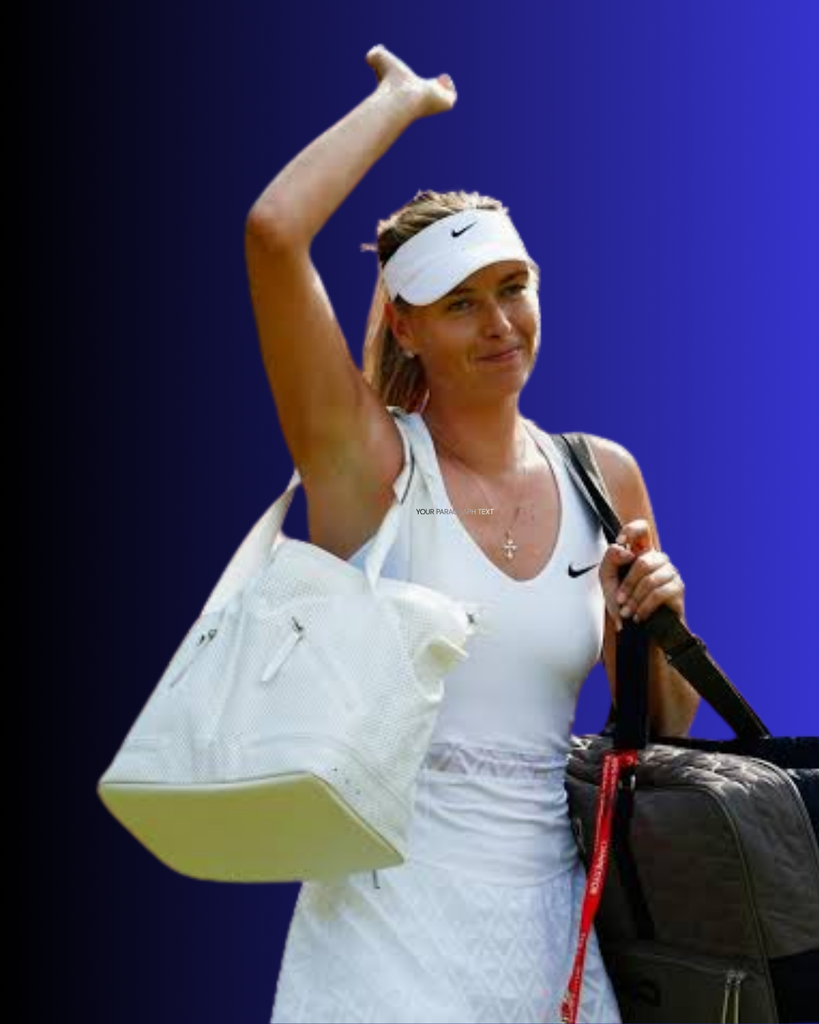
At 32 years old, after nineteen years as a professional and 28 years since she first picked up a racket, she was ready to walk away.
Life Beyond the Court
Retirement did not mean stepping out of the spotlight. Sharapova had already built a reputation as one of the most successful athletes in business, launching Sugarpova, her own candy brand, years before she stopped competing. She has continued investing in and advising various companies since leaving tennis, applying the same discipline that carried her through injuries and comebacks to a completely different arena.
She also released a memoir titled Unstoppable, giving fans a much closer look at the sacrifices behind the trophies, including the story of that pull out couch apartment and the $700 that started it all.
Why Her Story Still Matters
There are plenty of athletes with impressive statistics. What makes Maria Sharapova’s story genuinely interesting is the distance between where she started and where she ended up. A little girl from a Siberian town, born into the aftermath of one of the worst nuclear accidents in history, ends up as one of the most recognizable faces in global sports, a five time Grand Slam champion, an Olympic medalist, and a successful entrepreneur.
Her career had scandal, injury, heartbreak, and setbacks that would have ended most people’s ambitions. It also had grit, resilience, and a willingness to rebuild from almost nothing, more than once.
That combination is probably why her story still resonates with people who have never picked up a tennis racket in their lives. It is not really about tennis at all. It is about what happens when someone refuses to accept that their starting point determines their ending point.
From a small apartment in Siberia to Centre Court at Wimbledon, Maria Sharapova’s journey remains one of the most remarkable in the history of the sport.
